
When the shower becomes the hardest part of the day
For many families in Peterborough, Ontario, the shower is where a parent's changing balance first becomes a daily worry. Climbing over a bathtub wall, standing on a wet surface, reaching for a towel bar that was never meant to carry weight — none of it was a problem twenty years ago, and now every shower feels like a risk. Often the parent notices it before anyone else does and quietly starts showering less.
The good news is that a bathroom can be made much safer without turning it into something that looks like a hospital. This guide walks through the changes that matter most, roughly in the order we recommend them, and explains when a small retrofit is enough and when a full walk-in shower conversion is the better answer. It is written for adult children helping a parent, but it applies just as well to anyone planning to stay in their own home for the long term.
Start with the entry: take away the tub wall
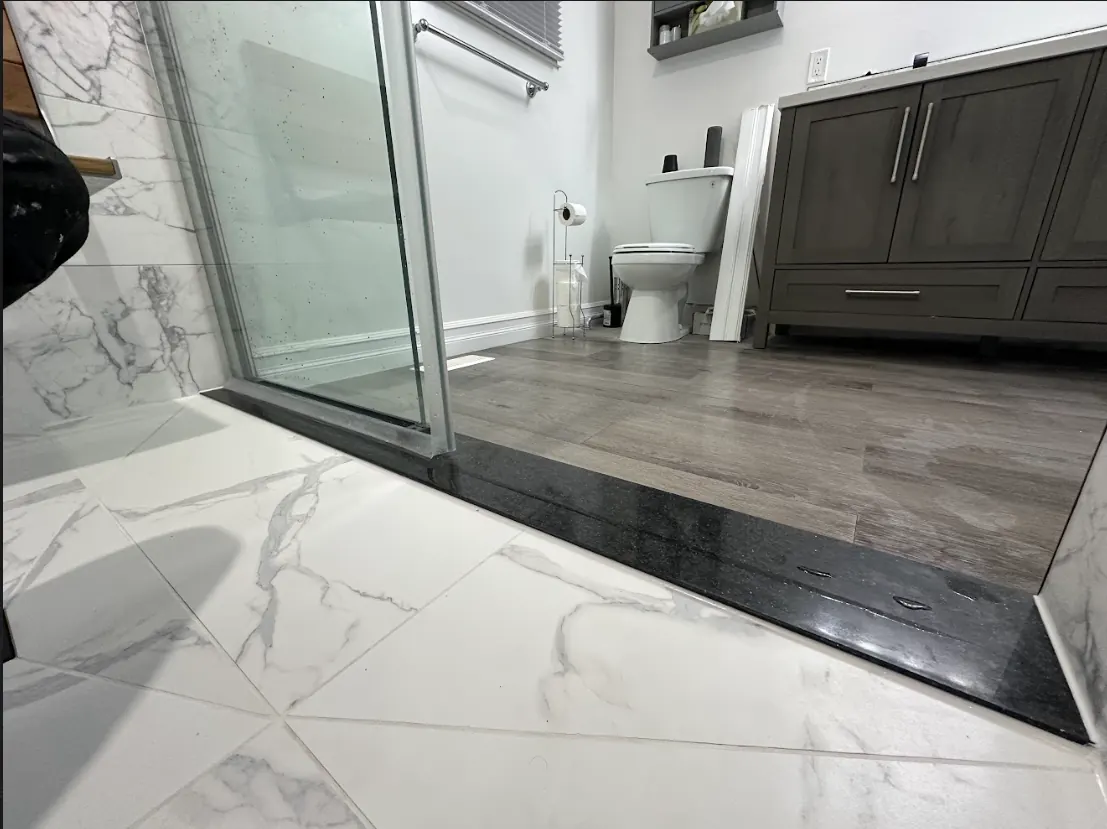
The single biggest change is removing the bathtub wall. Stepping over a tub means lifting one foot high while balancing on the other, on a wet surface, usually while holding a shower curtain. Replacing the tub with a walk-in shower that has a low threshold, or no threshold at all, turns that manoeuvre into a normal step.
A curbless entry is the ideal where the floor structure allows it, because a walker or a wheelchair can roll straight in and a caregiver can help without a barrier in the way. Where the floor cannot be recessed, a low-threshold shower base still removes almost all of the climb. We check what is under the floor during the in-home assessment and tell you which one is practical in your parent's bathroom.
- A low or zero-threshold base replaces the climb over the tub
- Curbless allows a walker or wheelchair to enter without a barrier
- Which option fits depends on the floor structure, not the room size
- Most conversions keep the shower in the footprint the tub already occupies
Grab bars that are anchored, not stuck on
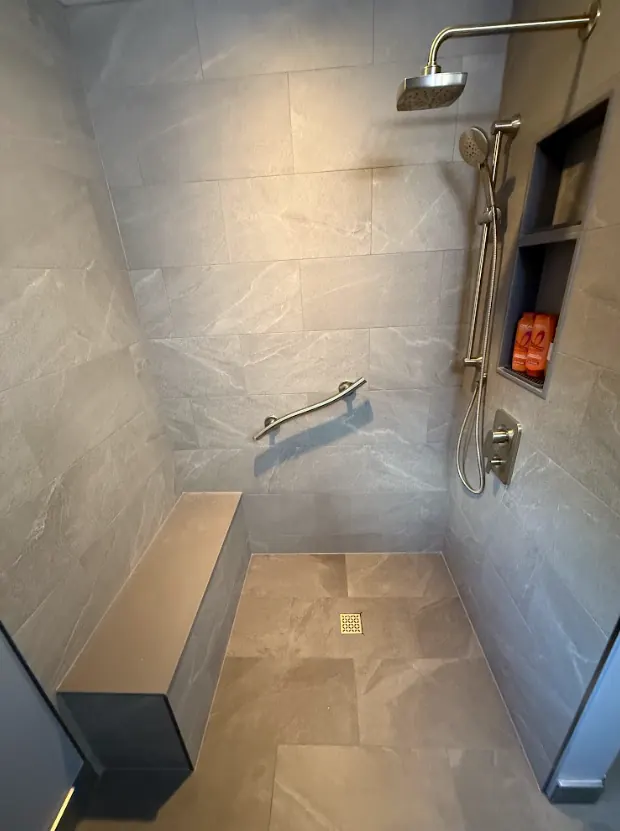
A grab bar is only as good as what it is screwed into. Suction-cup bars and bars fastened only to tile or drywall can let go at exactly the moment they are needed. Properly installed grab bars are mounted into solid blocking inside the wall, which is why the best time to add them is during a renovation, when the wall is open and the backing can be placed precisely where it is needed.
Placement matters as much as strength. We put bars where a person actually reaches: at the entry, beside the seat, and in the standing zone by the controls. A vertical bar at the entry, a horizontal bar along the back wall and a bar within reach of the seat cover most situations. If your parent already works with an occupational therapist, we follow their recommendations for height and position.
Somewhere to sit
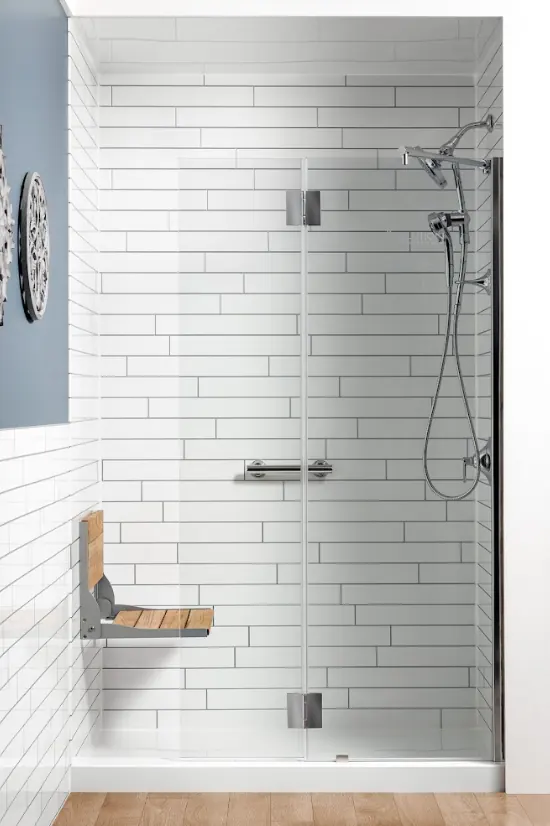
Being able to sit changes a shower from something to get through to something to enjoy again. A built-in bench is the most permanent option and gives a solid, stable surface. A wall-mounted fold-down teak seat gives the same benefit in a smaller shower and tucks away when someone else in the house does not need it.
Either way, the seat has to be installed into proper backing so it can carry a person's full weight every day. A seat paired with a grab bar beside it and a handheld shower within reach is the combination that lets a parent shower seated, safely and on their own.
Floors and walls that stay safe and easy to clean
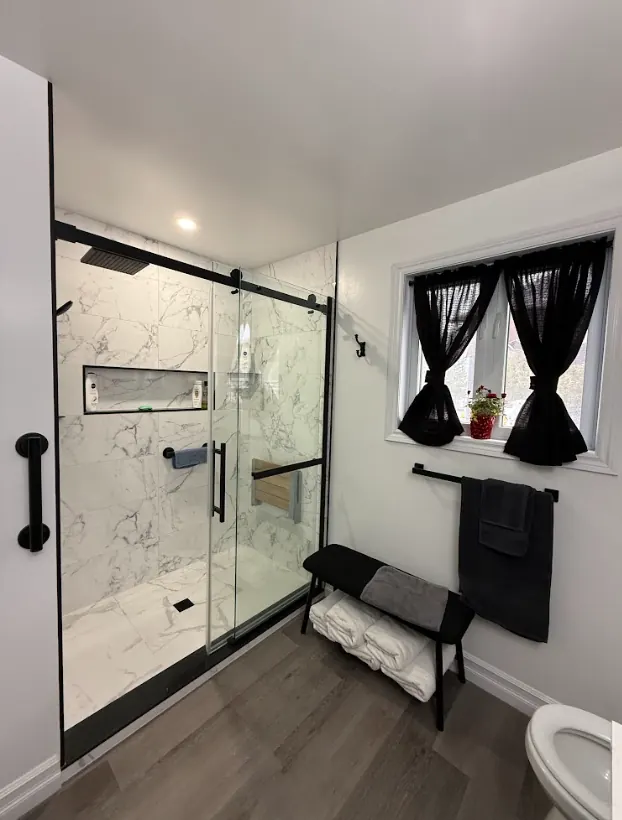
A shower floor should give grip when it is wet. Our shower bases have a fine textured surface that sheds water and provides traction underfoot without feeling rough. If tile is used on the floor, smaller tiles with more grout joints give more grip than large polished slabs.
Walls are about upkeep as much as safety. Grout needs scrubbing, and scrubbing a shower is exactly the kind of bending and reaching that becomes hard with age. Acrylic wall panels have no grout lines at all, wipe clean and are warm to the touch, which is why we recommend them for most accessibility-focused bathrooms. Tile is still an option where the look matters more than the maintenance.
- Textured, slip-resistant shower base
- Grout-free acrylic wall panels for easy cleaning
- Tile remains available where the look is the priority
- Everything sits on a properly waterproofed assembly built to last
Put the controls within reach
Fixed shower heads force a person to stand under the spray and to reach up to adjust anything. A handheld shower on an adjustable slide bar lets your parent direct the water while seated, and lets a caregiver help without getting soaked. Lever-style handles are far easier to operate than round knobs for anyone with reduced grip or stiff hands.
We also think about what is at eye level when someone is seated: a niche or shelf placed low enough to reach from the bench, and a towel within arm's length of the exit.
Having the conversation with a parent
Most parents do not want a renovation that announces that they are getting older. The way to have this conversation is to focus on independence and comfort rather than risk: being able to shower without help, a bathroom that is easier to clean, a shower that looks like a nice bathroom and not a care facility. The photographs in this guide are all real Aksel SafeBath showers in Peterborough, Ontario and the Kawarthas, and none of them look clinical.
It also helps to involve your parent in the choices — the tile or panel colour, where the seat goes, whether the glass is clear or frosted. When the bathroom feels like theirs, it gets used. If an occupational therapist is already involved, we are happy to coordinate directly with them so the finished shower matches the care plan.
Retrofit now, or convert the whole shower?
Not every family is ready for a full conversion at once. We can retrofit grab bars, a fold-down seat and a handheld shower into many existing bathrooms without a full renovation. That is a sensible first step when the tub is staying for now or the budget is being planned in stages.
A full tub-to-shower conversion is the right answer when the tub wall itself is the problem, when a walker or wheelchair needs to get in, or when the bathroom is due for an update anyway. It solves the entry, the seating, the grab bars, the floor and the walls in one job, with one crew, and the result is a bathroom that works for the next twenty years rather than the next two.
- Retrofit: grab bars, seat and handheld shower added to the existing bathroom
- Conversion: tub removed, low or zero-threshold walk-in shower built in its place
- Ask for both options at the assessment — we will tell you which one fits
How Aksel SafeBath works in Peterborough, Ontario
Aksel SafeBath is the accessibility-focused side of Aksel Tile & Bath. It starts with a free in-home assessment anywhere in Peterborough, Ontario and the Kawarthas: we visit, measure, listen to what your parent needs, and coordinate with family and an occupational therapist when one is involved. You then get a clear plan and quote with the scope and timeline set out before any work starts.
One crew handles the whole job from demolition to the last grab bar, we protect the home and leave the bathroom tidy at the end of every day, and we treat every client with patience and dignity. To see what is included and browse recent accessible conversions, visit our SafeBath page. If you are weighing a curbless floor against a low threshold, our curbless vs low-threshold guide explains the difference, and our walk-in showers page covers the full range of conversions we build.